TonicNest may earn a commission if you buy through links on this page, at no extra cost to you. That does not change what we report.
Part of our Cerebrozen overview. Last checked October 19, 2026.
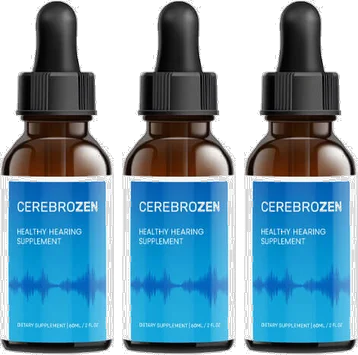
What is Cerebrozen used for? The vendor sells it as a liquid formula for hearing and ringing in the ears, but its own Supplement Facts label lists a 200 mg proprietary blend of 22 energy and weight-loss style items, and the front panel reads "Ketone Liquid Drops"[2]. None of those 22 items, nor the 0.7 mcg of chromium, has a human trial for tinnitus or hearing loss.
Below we compare the sales page with the label and the research, checked October 19, 2026. Our methods are on the TonicNest methods page.
What is Cerebrozen used for, and does it work?
Cerebrozen is marketed for hearing support and tinnitus, and there is no published evidence that it helps either. We found no study of the finished Cerebrozen drops in the sources we checked, and none of the 23 label items has been tested for hearing in people.
The wider picture is just as clear. The American Academy of Otolaryngology, Head and Neck Surgery (AAO-HNS) tinnitus guideline recommends against dietary supplements for persistent, bothersome tinnitus[3]. The NIH's National Institute on Deafness and Other Communication Disorders (NIDCD) says that none of the vitamins, herbal extracts and supplements advertised for tinnitus has been proven effective[4].
What can be concluded: the bottle does not match the pitch. Six of the eight ingredients the sales page names are absent from the label[1][2]. The full list is on our Cerebrozen ingredients page.
Which evidence levels should you not confuse?
Four kinds of evidence get blended together on supplement sales pages, and only the last two can show that a product works. Cerebrozen has none at those two levels.
Plausibility
A mechanism story, such as the vendor's line that vinpocetine "supports blood flow to the ears"[1]. A story is not a result, and in this case vinpocetine is not on the label at all.
Ingredient trials
Studies of single ingredients. The label items were studied for other goals: guarana for short-term alertness[7], African mango for weight[8], beta-alanine for hard exercise[10]. None measured hearing.
Finished-product trial
A placebo-controlled test of the actual drops in people with tinnitus. None appears in the sources we checked.
Replication
Repeat trials that agree. Even ginkgo, the most tested supplement for tinnitus, left Cochrane authors uncertain in 2022, with low to very low certainty evidence[5]. A 2026 analysis of over-the-counter tinnitus products found no firm conclusions for any of them[6]. Ginkgo is advertised for Cerebrozen but missing from the label.
Cerebrozen claims vs what the evidence supports
Most of the sales-page claims describe ingredients that are not in the bottle, or effects nobody has measured. Here are the main ones, quoted from the vendor and set against the label.
| Vendor claim | Reasonable reading | Limitation |
|---|---|---|
| "Over 20 Carefully-Selected Ingredients That Support Healthy Hearing" | The label does list 22 blend items plus chromium | Six of the eight named ones are absent; none of the 22 was tested for hearing |
| "Vinpocetine Supports blood flow to the ears" | Vinpocetine is not on the label | The claim describes an ingredient you do not receive |
| "Lion's Mane Powder Supports hearing" | Lion's mane is not on the label | Same problem |
| "No Stimulants" | The label lists guarana and green tea | Both are caffeine sources |
| "Most people start feeling a difference after the first week" | A vendor statement with no data shown | No trial of the product measured this |
| "research-backed, all-natural ingredients combined in the precise ratios required" | Ratios are hidden in a 200 mg proprietary blend | Nobody outside the vendor can check the ratios |
If you still want to see the current offer and refund terms, they are one click away.
Which ingredients matter most?
No single ingredient carries the product, because each one is present at a fraction of the dose used in research. The blend is 200 mg split across 22 items, which averages about 9 mg each per 1 ml serving, or about 18 mg at two droppers[2].
Compare that with the trials:
- Beta-alanine: 3,200 to 6,400 mg a day for 4 weeks or more[10].
- L-carnitine: 1 to 3 g a day in weight-loss trials[12].
- African mango: 150 mg twice daily in the main trial[8].
- Guarana: 37.5 to 300 mg of extract per dose[7].
- GABA: 20 to 300 mg in stress and sleep trials, and it is unclear whether oral GABA reaches the brain[11].
- Raspberry ketone: no human trial of it alone[9].
The populations differ too. These trials enrolled overweight adults, athletes and healthy volunteers, not people with tinnitus. The forms differ: the research used capsules, powders and extracts, while Cerebrozen is a glycerin and water liquid.
What results are realistic to expect?
Based on the evidence, no change in tinnitus or hearing is a realistic expectation, because nothing in the label has been measured against either. The ingredient trials measured other outcomes over set timeframes: alertness within hours of a caffeine-containing guarana dose[7], exercise capacity after 4 or more weeks of beta-alanine[10], and weight change over weeks to months with African mango and L-carnitine[8][12].
The one effect you might notice is from caffeine in guarana and green tea. Caffeine is often blamed by patients for louder tinnitus, though the evidence on that is mixed. Possible reactions are covered on our Cerebrozen side effects page.
When should you see a doctor instead?
Tinnitus is a symptom, and some causes need prompt care. An ear, nose and throat doctor or audiologist can check for earwax, hearing loss or medicine side effects before you spend money on drops. See a doctor right away if:
- You lose hearing suddenly, in one or both ears.
- The ringing is in one ear only, or pulses in time with your heartbeat.
- It comes with dizziness, spinning, or loss of balance.
- It follows a head injury, or comes with facial weakness or numbness.
- You have ear pain, discharge or fever.
- The noise affects your sleep or mood so much that you feel hopeless.
Evidence conclusion
Cerebrozen is used for hearing support by its marketing only. The label, the guideline and the research do not support that use.
| Decision question | Current assessment |
|---|---|
| Has the finished product been tested? | No trial in the sources we checked |
| Do the label ingredients have hearing evidence? | No, none of the 23 items |
| Are the advertised ingredients in the bottle? | Six of eight are not on the label |
| Do ear specialists back supplements for tinnitus? | AAO-HNS recommends against them; NIDCD says none is proven |
| Can you get your money back? | 60-day guarantee, but an approved RMA and paid return postage are required; see Cerebrozen price and refund terms |
Questions about the seller are covered in is Cerebrozen legit.
Back to the Cerebrozen overview.
Frequently asked questions
Is Cerebrozen good for tinnitus?
There is no evidence that it helps. None of the 23 items on its label has a human trial for tinnitus or hearing loss, the AAO-HNS guideline recommends against supplements for persistent tinnitus, and NIDCD says no supplement for it has been proven effective.
What does Cerebrozen actually contain?
The vendor label lists 0.7 mcg of chromium and a 200 mg proprietary blend of 22 items, including guarana, African mango, raspberry ketones, green tea, beta-alanine and L-carnitine. Individual amounts are not disclosed, so each averages about 9 mg.
How long does Cerebrozen take to work?
The vendor says most people feel a difference after the first week, but no trial of the product measured this. Because no label ingredient has been tested for hearing, there is no evidence-based timeline for any tinnitus change.
Does Cerebrozen contain caffeine?
Yes, indirectly. The sales page says No Stimulants, but the label lists guarana seed extract and green tea leaf extract, and both are caffeine sources. The amounts are hidden inside the 200 mg blend, so the caffeine per serving is unknown.
Why does the Cerebrozen bottle say Ketone Liquid Drops?
The vendor label front panel reads Ketone Liquid Drops, and the blend lists raspberry ketones, African mango and coleus forskohlii, which are weight-loss style items. The vendor has not explained why a hearing product carries that label.
Sources
- Cerebrozen order page and FAQ. cerebrozen24.com, read October 19, 2026.
- Cerebrozen Supplement Facts label image. cerebrozen24.com, read October 19, 2026.
- Clinical Practice Guideline: Tinnitus (Tunkel et al., 2014). Otolaryngology, Head and Neck Surgery, read October 19, 2026.
- Tinnitus. NIDCD, National Institutes of Health, read October 19, 2026.
- Ginkgo biloba for tinnitus (Sereda et al., 2022). Cochrane Database of Systematic Reviews, read October 19, 2026.
- Over-the-counter tinnitus therapies: systematic review (2026). Laryngoscope Investigative Otolaryngology, read October 19, 2026.
- Guarana and cognition: systematic review and meta-analysis (2023). PubMed, read October 19, 2026.
- Irvingia gabonensis for weight loss: systematic review of RCTs. PubMed, read October 19, 2026.
- Raspberry ketone: research summary. PubMed, read October 19, 2026.
- Beta-alanine and exercise capacity: systematic review and meta-analysis. PubMed, read October 19, 2026.
- Oral GABA for stress and sleep: systematic review. PubMed, read October 19, 2026.
- L-carnitine and weight loss: meta-analysis of 37 RCTs. PubMed, read October 19, 2026.
This page is general information, not medical advice. Dietary supplements are not reviewed by the FDA for safety or effectiveness before they are sold and are not intended to diagnose, treat, cure or prevent any disease. Talk to your doctor before taking any supplement, especially if you are pregnant, nursing, take medication or have a health condition.